Answer first, context after
Why does my AC capacitor keep failing every summer?
Bakersfield is where capacitors go to die: they age with heat, and a condenser cabinet baking in full valley sun cooks its own electronics all summer. One failure every several years is normal wear, $189 to $240 flat to fix. A capacitor failing every single year is a symptom of something upstream, and replacing it annually without asking why is treating the fuse instead of the fault.
Updated July 2026
The run capacitor is the most-replaced part in Kern County air conditioning, and it helps to know what it actually is: a small canister that stores the electrical jolt that starts your compressor and fan motors and then steadies them while they run. Think of it as the AC’s fuse in spirit: cheap, mortal, and designed to be the first thing that goes.
Why this valley eats them: capacitors age in proportion to heat, and their working life shortens dramatically as temperatures climb. A capacitor lives inside a metal cabinet, in full sun, next to a hot compressor, on a 105 degree afternoon, for months at a stretch. The same part that lasts many years on the coast gets a compressed career here. This is ordinary physics, not bad luck or a bad brand, and it is why a capacitor failure on a Bakersfield system past its fifth summer surprises exactly no one.
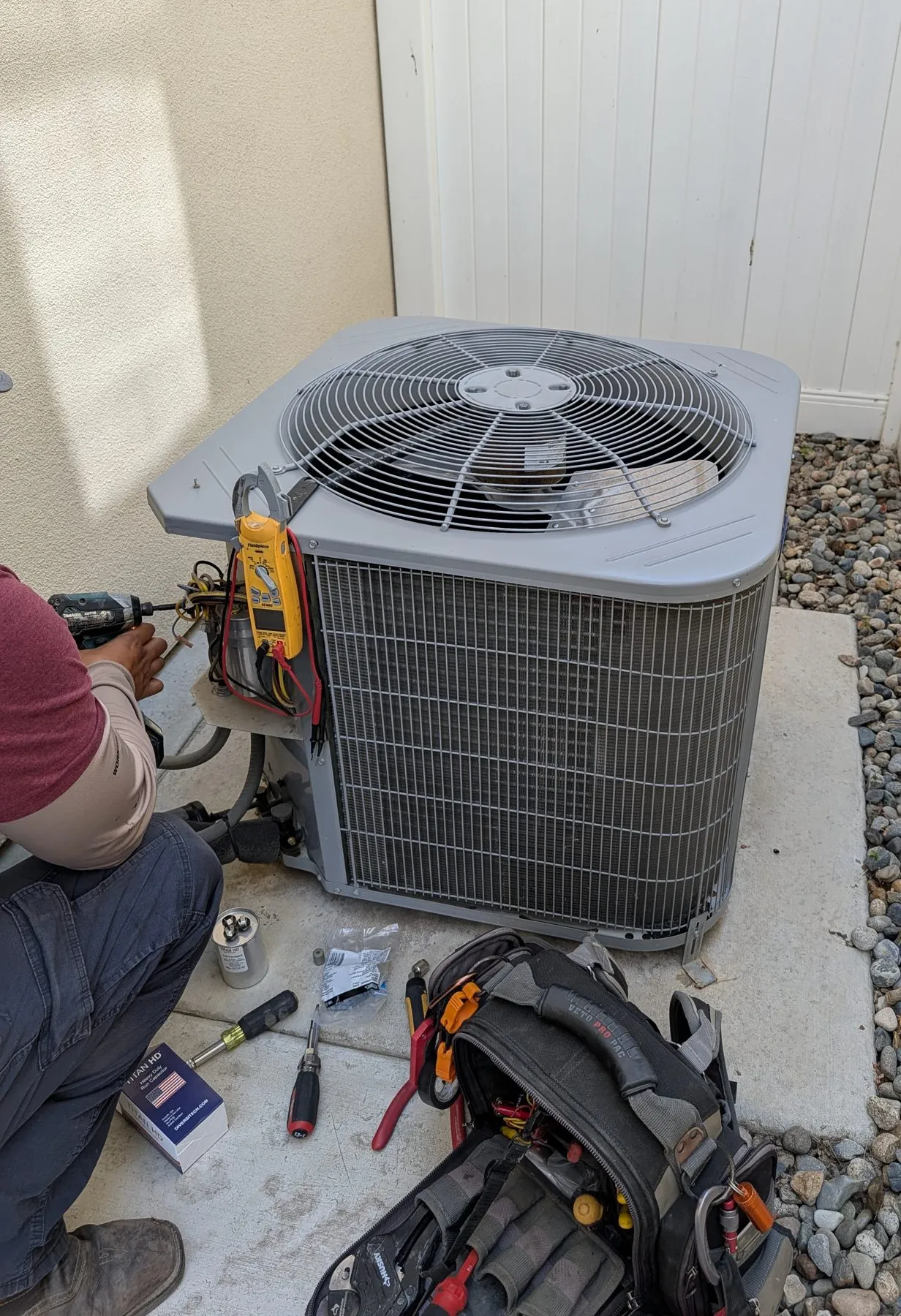
When it stops being normal: a capacitor that fails every year or two is telling you something upstream is killing it. The usual suspects: a compressor or fan motor beginning to fail and drawing hard through every start, a wrong-rated replacement installed during a previous rushed visit, chronic voltage problems, or a bargain part swapped in at bargain lifespan. Replacing capacitor after capacitor without measuring why is treating the fuse and ignoring the fault, and eventually the fault graduates to tripping breakers or finishing off the compressor.
What honest replacement looks like: the new capacitor matches the microfarad rating the motor calls for, the technician measures the motors’ actual draw to check whether something upstream caused the death, and both numbers go in writing. $189 to $240 flat, diagnostic $89 and waived with the repair.
The upsell to watch for: “weak capacitor” is also a favorite discovery of cheap tune-ups, because it is real often enough to be believable. The defense is the same as ours would be: readings against the rated values, on paper. A capacitor test has numbers, so anyone declaring one weak should be able to show you two of them, measured and rated. A pre-season check catches genuinely drifting capacitors in April, which is most of the argument for maintenance in one sentence.
A capacitor that dies yearly is a symptom.
Replacing it again without finding out why is how you buy the same part every summer. Heat, a struggling compressor, and the wrong replacement part are the usual reasons.
Repairs carry a 12-month workmanship warranty.